
Choosing Between a Generic CRM vs. a Forex-Specific One

Choosing Between a Generic CRM vs. a Forex-Specific One
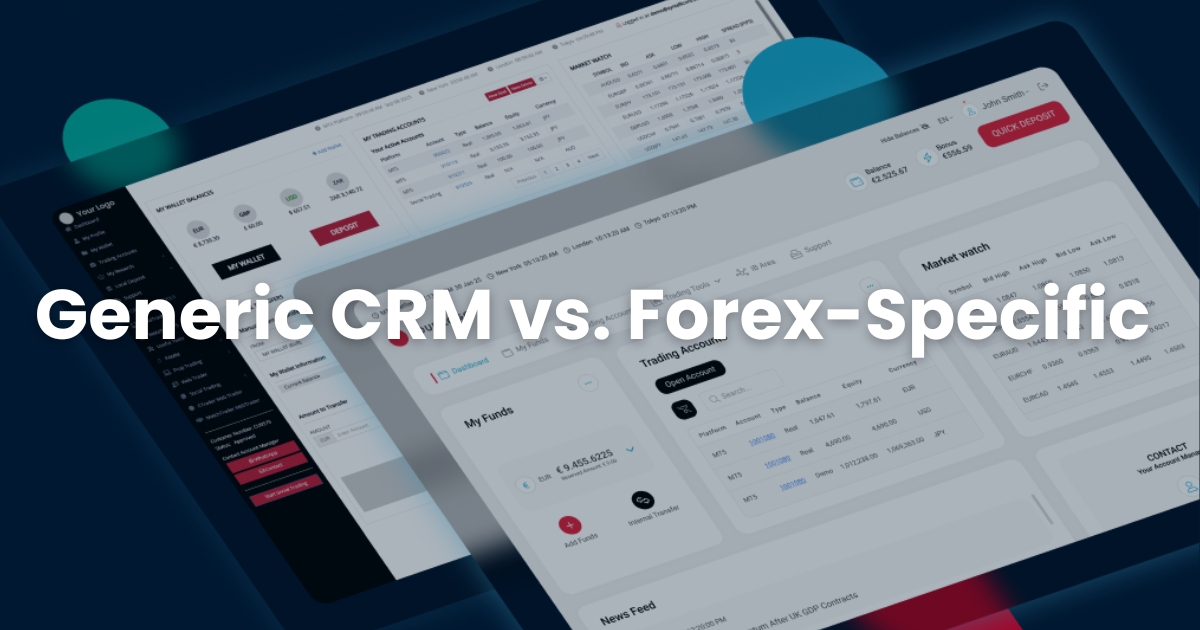
Starting with the basics, a customer relationship management (CRM) system is essentially a technology platform that centralizes customer information and helps businesses manage their interactions. It’s a tool that allows companies to make strategic decisions, improve efficiency through set processes, and provide excellent customer service.
Key features of a standard CRM include:
- Contact management
- Customer support ticketing
- Email and marketing campaign automation
- Sales and pipeline tracking
- Data analytics and reporting
When it comes to the diverse and complex environment of the Forex industry, however, these features only scratch the surface of what’s really needed. Forex brokers operate in highly regulated markets, across multiple jurisdictions, and in fast-moving trading environments. This requires much more than what a generic CRM can provide.
Generic systems can work well in industries like retail, real estate, or healthcare. But forex brokers face very specific operational needs that demand specialized solutions.
The integration between your CRM and trading platform should be so seamless that your team never has to manually transfer data.
A Forex CRM goes far beyond traditional features. It integrates directly with trading platforms (such as MT4/MT5), payment service providers (PSPs), and other essential partner systems. It simplifies compliance tasks, supports IB and Affiliate networks, and ties everything together into one seamless platform experience. From client onboarding to ongoing account management and performance analytics, a Forex CRM enables an all-in-one, streamlined workflow.
Customer support is another critical factor. The Forex industry operates across global time zones and is heavily influenced by breaking news and market events. This makes system reliability and security paramount. A broker’s CRM must be robust, scalable, and supported around the clock to avoid downtime and ensure that client needs are met without disruption.
Some smaller brokerages assume that custom or specialized CRMs are prohibitively expensive. In reality, the opposite is often true. The efficiencies, integrations, and compliance benefits of a Forex-specific CRM quickly outweigh the upfront costs. By choosing the right system, even smaller firms can scale faster, remain fully compliant, and deliver a world-class experience to both traders and partners.
The Bottom Line
The choice between a generic CRM and a Forex-specific one comes down to more than just features, it’s about fit. A Forex CRM is built with brokers in mind, offering tailored tools that align with the industry’s regulatory, technical, and operational demands. For brokers looking to grow, compete, and stay compliant, investing in a Forex-specific CRM isn’t just an option, it’s a necessity.
Book a demo today to discover how we help brokers build trust, streamline operations, and win in competitive markets.
